Wagyu vs USDA Prime: How Beef Grades Actually Work
Sep 15, 2026The short answer: USDA Prime is the highest of the three beef grades the USDA awards, and it is earned on marbling. Wagyu is a breed of cattle whose marbling usually runs past the top of that scale, which is why it is scored on Japan's 1 to 12 Beef Marbling Standard instead. Two words carry most of the weight on a steakhouse menu, and they are not measuring the same thing. USDA Prime is a federal grade, assigned to a carcass by a trained grader looking at a single cut surface. Wagyu is a breed, and the scale Japan built to score it runs far higher than the American one ever needed to. Our menu puts both under the same heading, wet-aged USDA Prime and Wagyu, so it is a fair question what the difference is actually worth. Here is how the grades get decided, and what they can and cannot tell you about the steak in front of you.
Grading is not the same as inspection
Every piece of beef sold in this country passes federal inspection, which is about safety and is not optional. Grading is a separate step, and it is voluntary. A packer asks for it and pays for it, and a USDA grader assigns a grade the packer can then print on the box. Ungraded beef is perfectly safe to eat. It simply carries no official quality claim, which is why you will never see an ungraded steak sold as Prime.
That is exactly why the word means something. Nobody can award it to themselves. The USDA's Agricultural Marketing Service writes the standard, and its graders apply it.
What a grader actually looks at
The whole decision happens at one cut. After a carcass is chilled, it is ribbed between the 12th and 13th ribs, which exposes a cross section of the ribeye muscle. The grader reads that surface for two things: how much marbling runs through the lean, and how old the animal was, judged from bone, cartilage, and the color and texture of the meat. Younger cattle are held to the published marbling minimums. Older cattle need more marbling to earn the same grade.
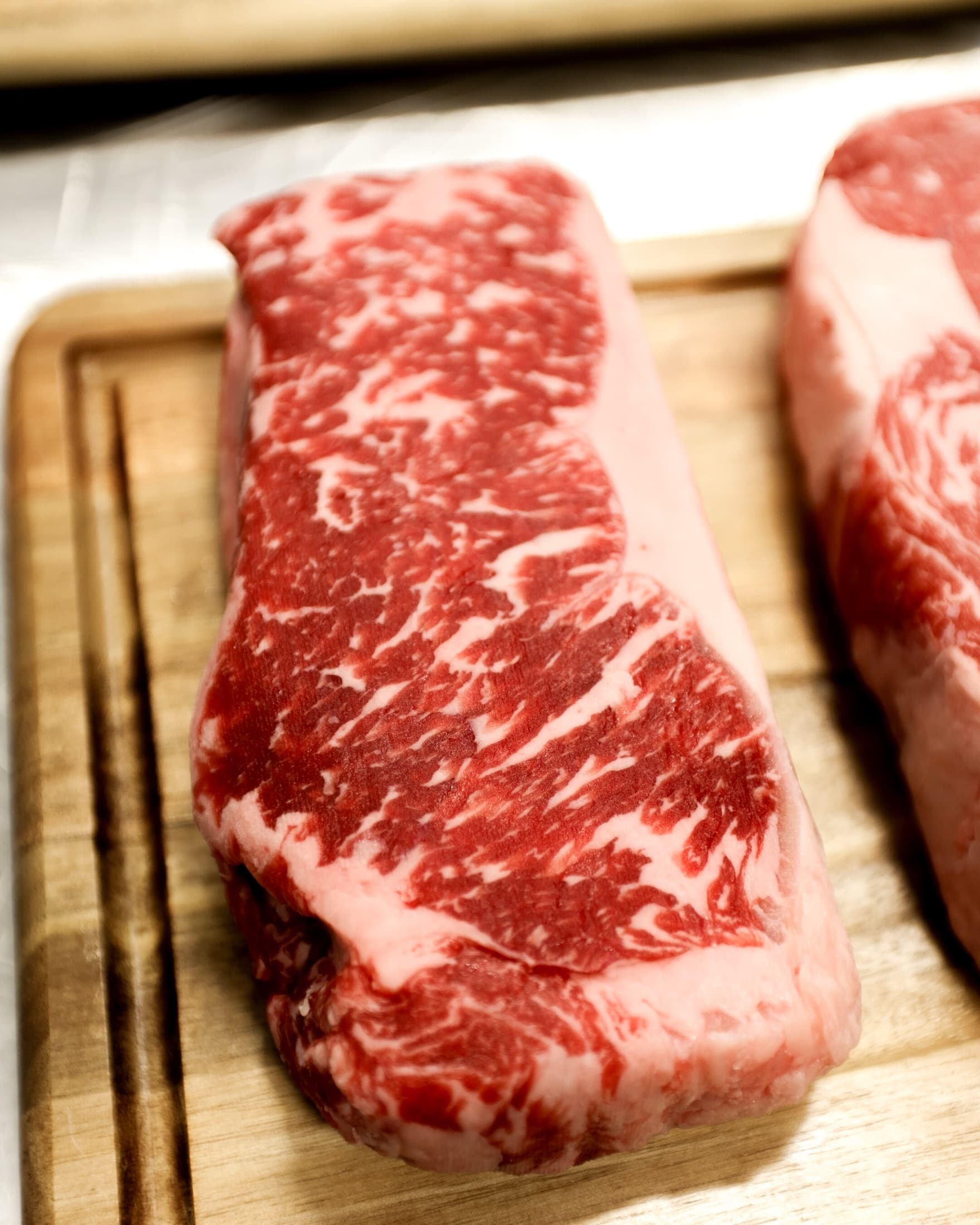
Marbling is described in named steps rather than numbers. From the top down, the Prime range covers very abundant, abundant, moderately abundant, and slightly abundant. Choice covers moderate, modest, and small. Select is slight. Below that sit traces and practically devoid, which you will not meet on a steakhouse menu. The USDA publishes reference photographs for each degree, and they are worth a minute, because the gap between slight and slightly abundant is obvious once the two are side by side.
Larger plants now use approved camera systems to measure the ribeye and back up the grader's call, but the standard itself has not changed. There is also a separate yield grade, from 1 to 5, which estimates how much usable meat a carcass will give. That number matters a great deal to the buyer at the packing plant and almost never to the person holding the fork.
The three grades you will actually see
- Prime. Slightly abundant marbling or more, from young, well-fed cattle. The USDA's own description notes it is generally sold in upscale restaurants, and it is a small share of the beef that gets graded.
- Choice. Small to moderate marbling. High quality, and the grade most supermarket steaks carry. A top-end Choice ribeye can be a very good steak.
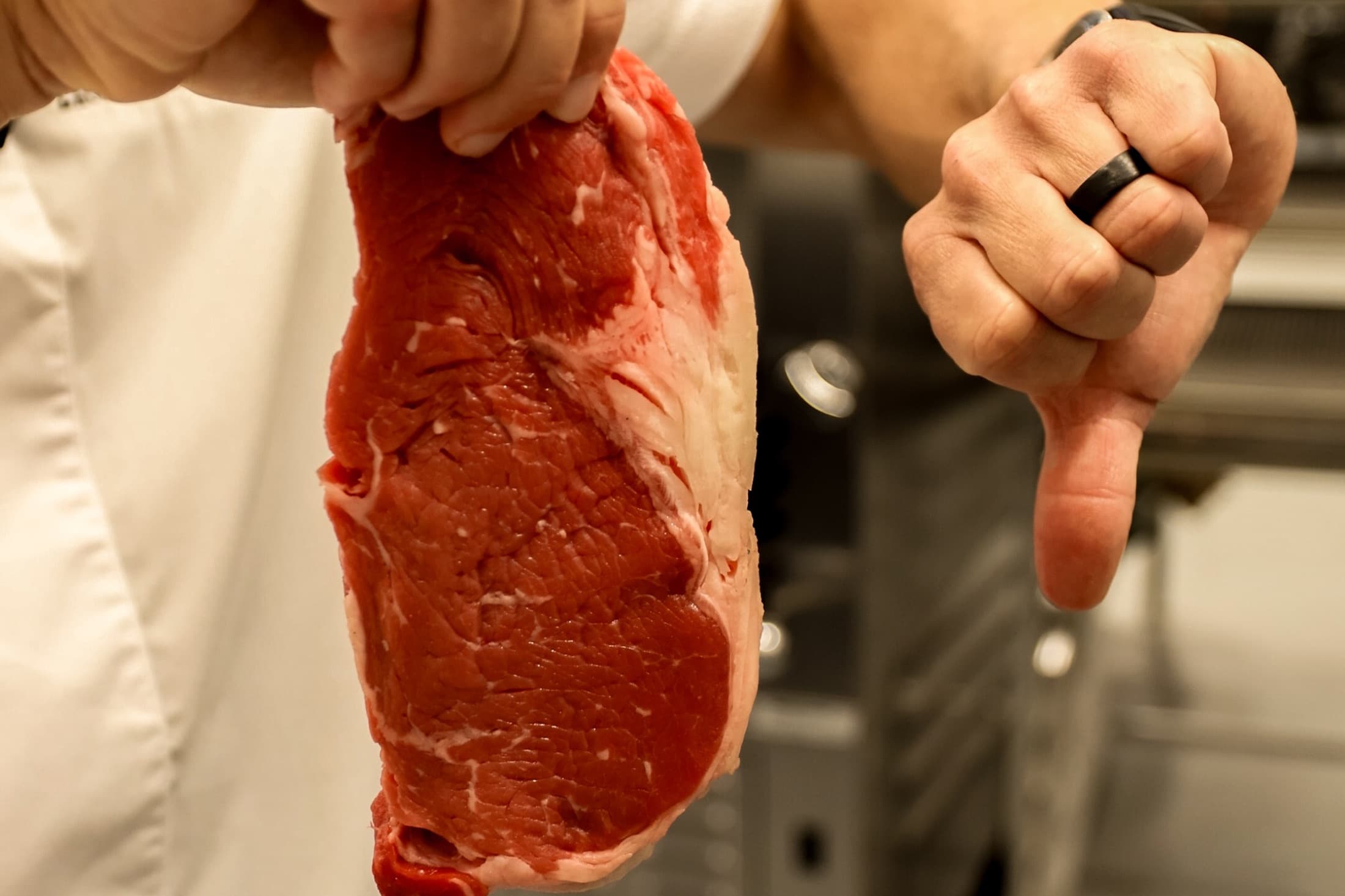
- Select. Slight marbling. Leaner and more uniform, fairly tender, but missing some of the juiciness and flavor that fat brings.
Nearly everything on the steak side of our menu is USDA Prime. The wet-aged filet, ribeye, spinalis, bone-in filet, and tomahawk are Prime. So are the porterhouse, cowboy ribeye, and T-bone, which are then dry-aged in house for a minimum of four weeks. The one steak listed on its own terms is the 15oz Wagyu strip, and the reason it sits apart is where the USDA scale stops.
Where the USDA scale runs out
Look again at how Prime is defined: slightly abundant marbling or more. That "or more" is doing a lot of work. A carcass that clears the line by a hair and a carcass carrying far more fat both leave the plant with the same word on the box. For most American cattle that is fine, because very few come anywhere near the top of the range. The scale was written for the beef this country was raising, and Prime was the ceiling that beef needed.
Wagyu broke that assumption. Cattle bred for generations to lay fat inside the muscle routinely pass the Prime line and keep going, and the USDA system has no further word for how far. Some American Wagyu is sold as USDA Prime, which is accurate and also tells you very little about it. So Wagyu producers reach for a different ruler.
Prime tells you a steak cleared the bar. It does not tell you how far over it went. That is the whole reason Wagyu needs a scale of its own.
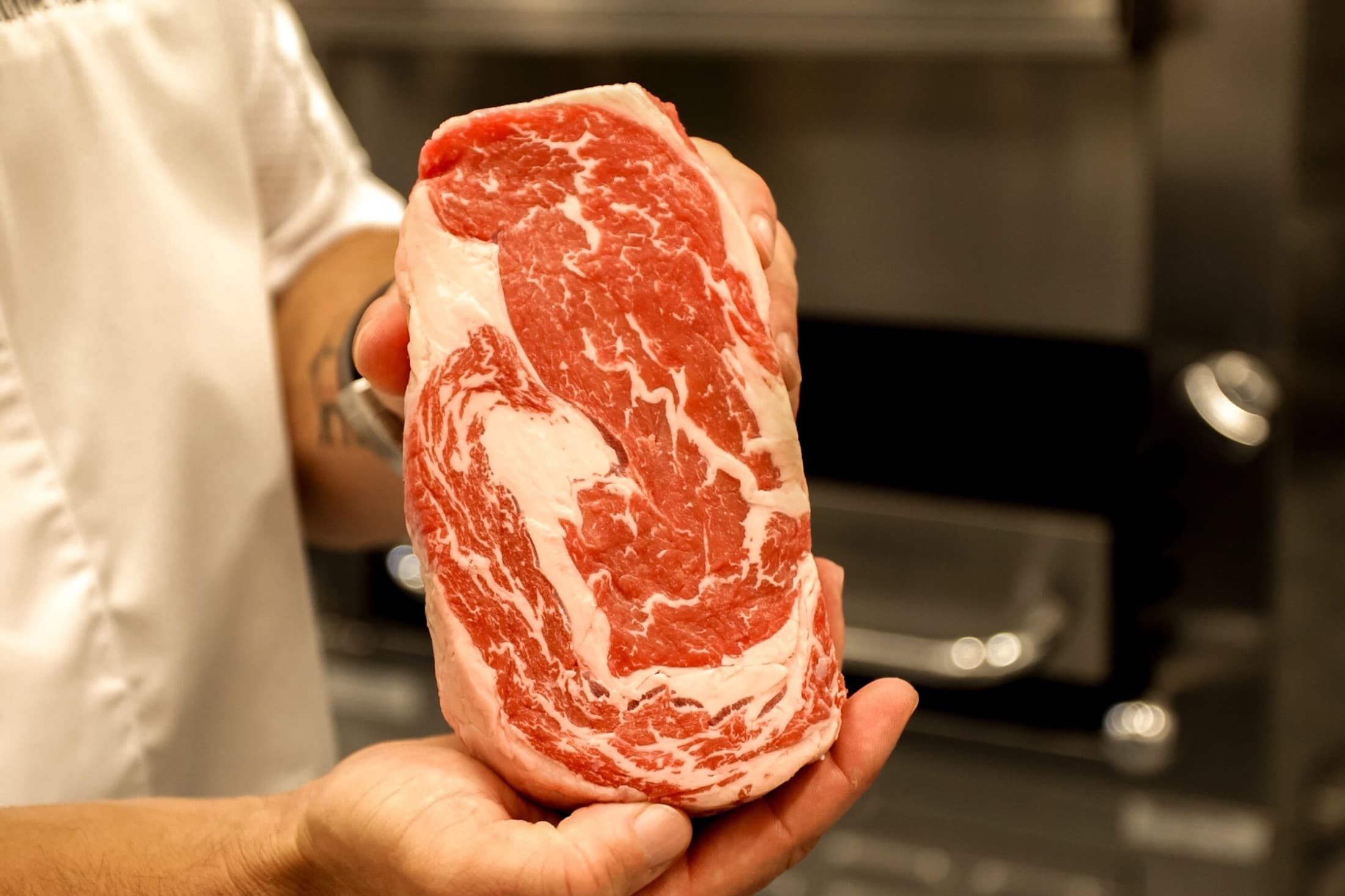
How Japan grades beef: BMS and A5
In Japan, the Japan Meat Grading Association grades carcasses on two separate axes, and the famous A5 is both of them written together. The letter is a yield grade, A through C, measuring how much of the carcass is usable meat. The number is a quality grade from 1 to 5, and it is set by the weakest of four scores: marbling, the color and brightness of the meat, its firmness and texture, and the color and quality of the fat. One soft score caps the whole grade.
Marbling inside that system is scored on the Beef Marbling Standard, or BMS, which runs from 1 to 12 against a set of reference images. At the top end it is a far finer ruler than the American one. A quality grade of 5 covers everything from BMS 8 to BMS 12, so even A5 is a range rather than a single point. Comparison charts disagree on exactly where USDA Prime falls on the BMS scale, but they agree it begins in the low single digits, which leaves most of the scale sitting above anything the USDA system can name.
What "American Wagyu" means on a menu
American Wagyu starts with Japanese Wagyu genetics, most often crossed with American cattle. The American Wagyu Association keeps the breed registry, and the word on a label can cover anything from fully Japanese bloodlines to a first cross that is half Wagyu. The crossbred animals keep more of the frame and beefy flavor of the American side, with a great deal more marbling than a typical Prime steer. Our piece on American Wagyu covers the breed itself and why its fat eats the way it does.
Because it can be graded like any other beef, American Wagyu often comes with a Prime grade, and producers who want to show how far past Prime it goes add a BMS score of their own. Our strip comes from top American producers and the source rotates, so we do not print a single number on the menu. It is on the list because it earned the spot, and it eats richer than anything else in that section.
What the grade means for your order
A grade describes marbling. It says nothing about flavor from aging, the character of the cut, or how the steak was cooked, and any of those can outweigh a grade in either direction. So use it as one piece of information, not a ranking.
If you want richness above everything, the Wagyu strip is the most heavily marbled steak we serve, and it rewards being shared around the table. If you want the biggest beef flavor, stay with Prime and let a fatty cut like the ribeye or spinalis carry it. If you want a flavor marbling cannot give you at all, order from the dry-aged list, where four weeks of time does something no grade measures. Our guide on how to order steak walks through cuts, temperatures, and toppings in more detail.
The clearest lesson is a tasting. Order the Wagyu strip and a Prime ribeye for the table, both medium rare, and trade slices. A group that wants to make a night of the comparison fits in the Executive Suite, which seats up to 28, and Blade Club members take 10 percent off food and beverage while they do it.
Taste the difference in downtown Gainesville
Start at the bar for happy hour from 4:30 to 6, then sit down to dinner. We are at 126 Bradford St NE in downtown Gainesville, open Tuesday through Sunday from 5 to 10 PM. Reserve a table on OpenTable, and ask your server what is in the dry-age room tonight.
Frequently Asked Questions
- Can Wagyu be graded USDA Prime?
- Yes. USDA grading does not depend on breed, so American Wagyu is graded like any other beef, and well-bred Wagyu clears the Prime threshold easily. Because Prime is the top of the USDA scale, many producers add a Beef Marbling Standard score to show how far past Prime the beef goes.
- What is the difference between USDA Prime, Choice, and Select?
- Marbling. Prime has slightly abundant marbling or more, Choice has small to moderate marbling, and Select has slight marbling. Graders judge it on the ribeye between the 12th and 13th ribs, along with the age of the animal.
- What does A5 mean on Wagyu?
- It is a Japanese grade made of two parts. The A is the top yield grade, meaning a high share of usable meat. The 5 is the top quality grade, set by the lowest of four scores for marbling, meat color, firmness and texture, and fat quality. A5 beef covers BMS 8 through 12.
- What is a BMS score?
- BMS stands for Beef Marbling Standard, a 1 to 12 scale used in Japan and by many American Wagyu producers. It measures marbling in much finer steps than the USDA grades do, which is why it is used to describe beef that is already past Prime.
- Are the steaks at CHR Steak USDA Prime?
- The wet-aged filet, ribeye, spinalis, bone-in filet, and tomahawk are USDA Prime, and so are the in-house dry-aged porterhouse, cowboy ribeye, and T-bone. The 15oz Wagyu strip is American Wagyu and listed on its own. The full lineup is on our menu, and the American Wagyu post explains that strip in detail.
- Where is CHR Steak, and do I need a reservation?
- We are at 126 Bradford St NE in downtown Gainesville, GA, open for dinner Tuesday through Sunday from 5 to 10 PM, with happy hour from 4:30 to 6. Reservations are strongly recommended on OpenTable or by phone at (678) 696-5111, and the dress code is smart casual.