Why Dry-Aged Steak Tastes Better
Feb 16, 2026Ever wonder why a dry-aged steak tastes the way it does? It comes down to time and patience. Most of the beef sold in this country never ages more than a few days between the packer and the plate. A proper dry-aged steak spends weeks getting ready for the heat, and you can taste every one of them.
What dry aging actually is
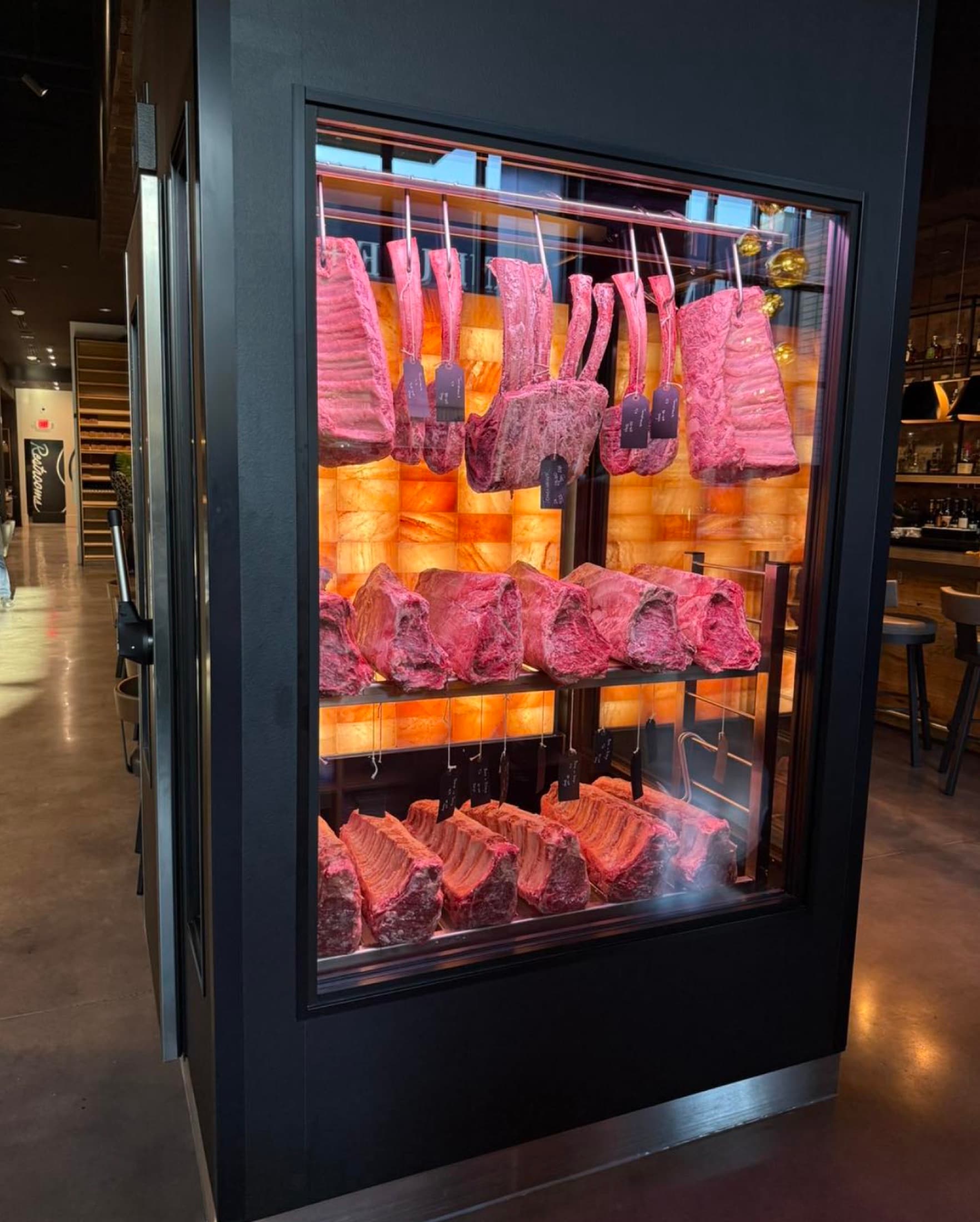
Dry aging is simple to describe and hard to do well. Whole subprimals, the large primal cuts before they are portioned into steaks, hang uncovered in a cold, dry, carefully controlled room. The temperature stays just above freezing, the humidity is kept low, and air moves constantly across the meat. Nothing is added. Nothing is sealed. The beef is simply given time. If you want the textbook version, the science of beef aging is well documented.
What happens over those weeks
Two things happen during those weeks. First, the beef slowly gives up moisture. As water leaves, everything that makes beef taste like beef stays behind and concentrates, so every bite carries more flavor than the same cut fresh. Second, the muscle's own natural enzymes get to work, gradually breaking down the connective tissue that makes meat chewy. The texture turns tender and almost buttery, the kind of steak you can cut with the side of a fork.
How the flavor changes
The flavor changes character too. Where a fresh steak tastes bright and simply beefy, a dry-aged steak develops depth: nutty, savory, faintly sweet notes that people often compare to browned butter or aged cheese. It is the same reason aged wine and aged cheese command attention. Controlled time transforms them.
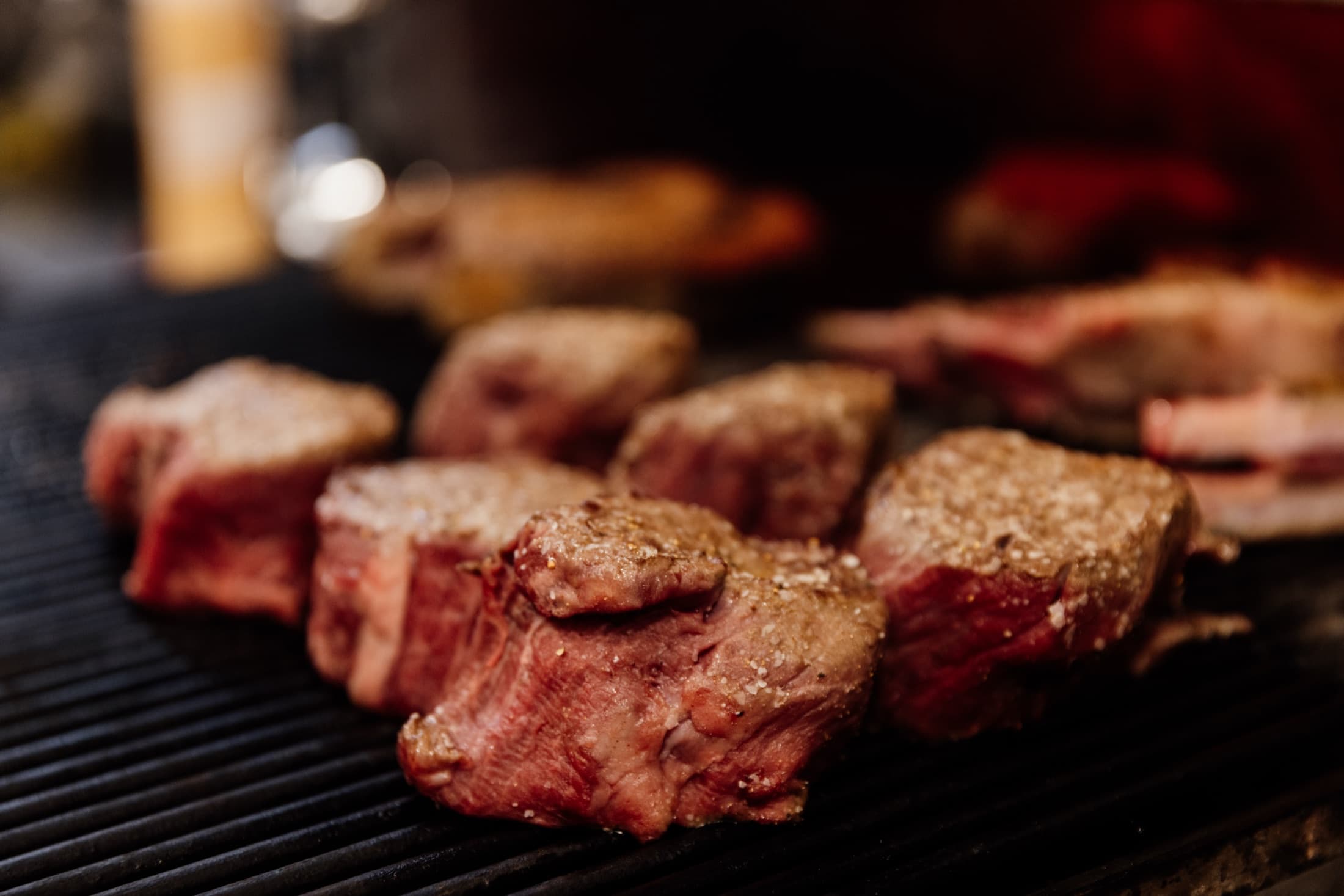
Controlled time is the whole trick. It is what turns good beef into a great steak.
Why it costs more
There is also a cost to doing it right, and it is why dry-aged beef earns its price. During aging, the outside of each subprimal forms a firm, dry crust that protects the meat beneath. Before a single steak is cut, that crust is trimmed away by hand. Between the moisture loss and the trim, a dry-aged cut gives up a meaningful share of its weight before it ever reaches the plate. What remains is the best of the beef.
Dry-aged vs wet-aged
Dry aging is not the only way to age beef. Most steakhouses, including ours, also serve wet-aged steaks, which rest in vacuum-sealed bags so they stay tender with a brighter, fresher flavor. We serve wet-aged USDA Prime alongside our dry-aged cuts, and the two styles side by side make the difference easy to taste. If you have never had a true dry-aged steak, order one next to a wet-aged cut and compare. That first bite explains this whole article better than we can.
How we do it at CHR
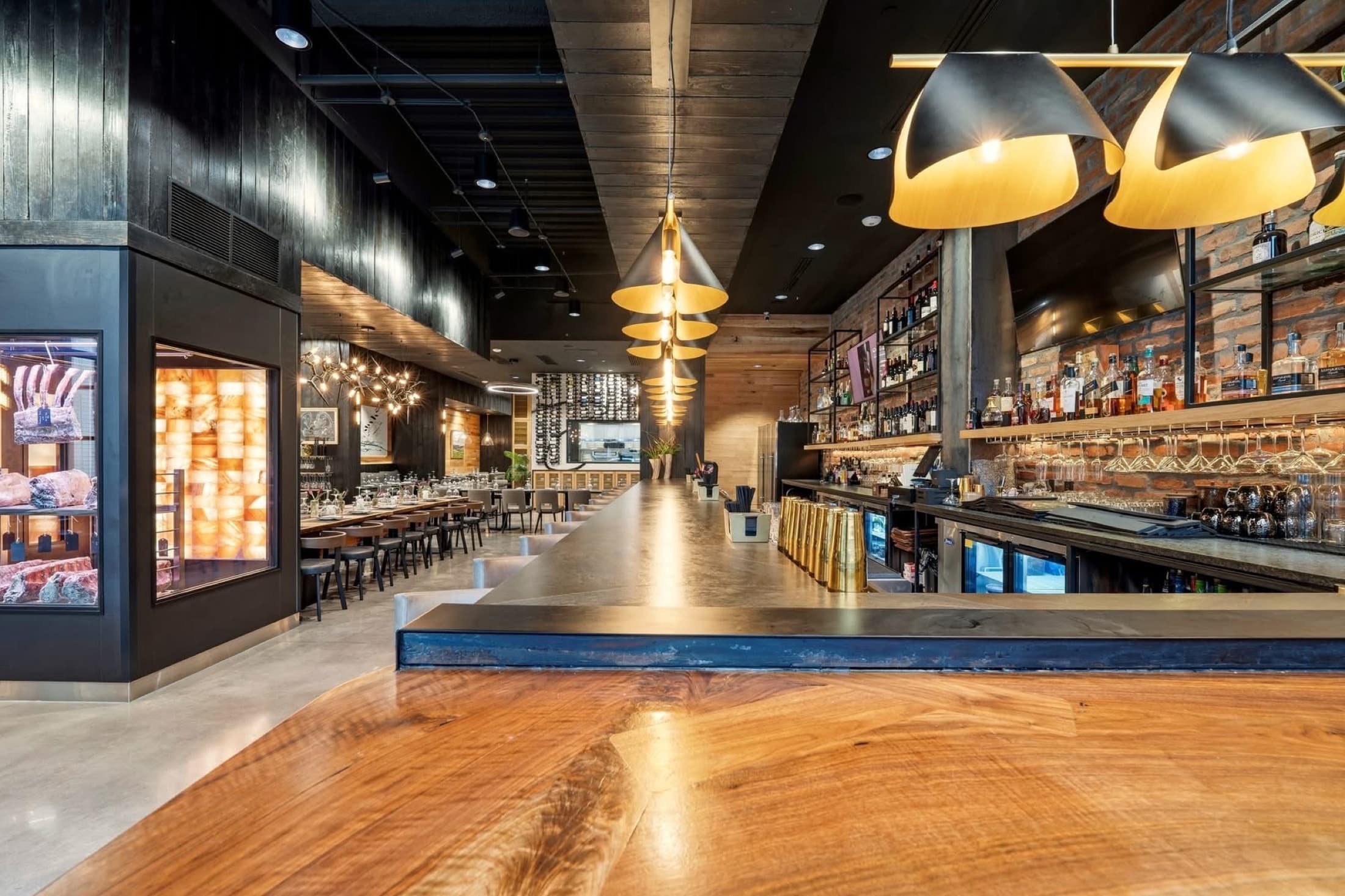
At CHR Steak we age our beef in house, behind glass, where you can see the program working in our dry-age room. Four weeks is our floor, and some cuts go longer when the beef tells us it should. We trim by hand and cut to order, so the dry-aged porterhouse, cowboy ribeye, or T-bone that reaches your table was shaped for it that night, never before. You can see the current cuts on our full menu.
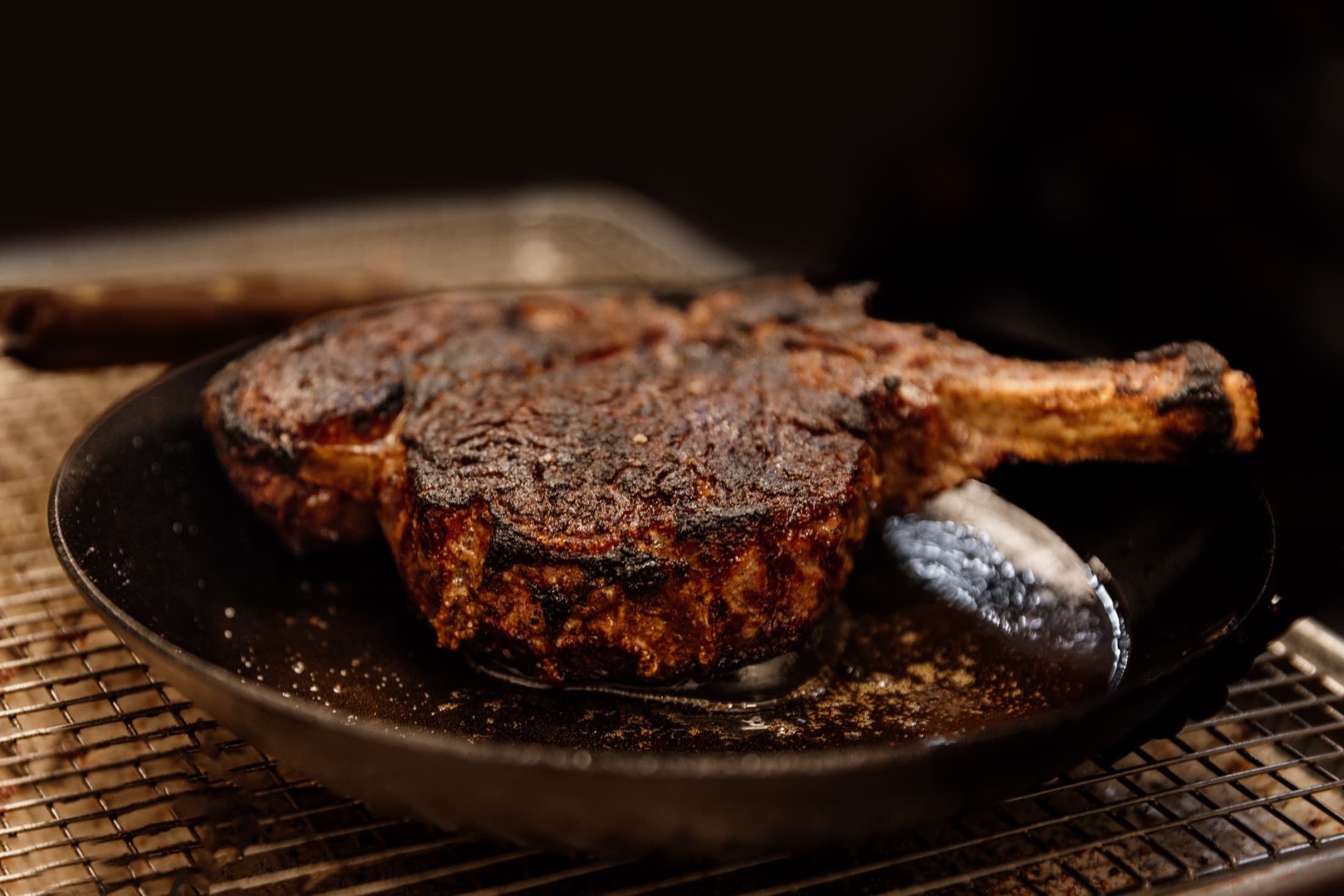
Reserve a table, ask your server what is in the dry-age room right now, and come taste what time does for beef. If you are planning the whole evening, our guide to date night in downtown Gainesville is a good place to start.
Frequently Asked Questions
- What is dry-aged beef?
- Dry-aged beef is whole cuts aged uncovered in a cold, dry, carefully controlled room for weeks. Moisture evaporates and the beef's natural enzymes tenderize the meat, which gives it a deeper flavor and a softer texture.
- How long does CHR Steak dry-age its beef?
- We dry-age in house, behind glass in our dry-age room, for a minimum of four weeks. Some cuts go longer when the beef is ready for it.
- What is the difference between dry-aged and wet-aged steak?
- Dry-aged beef ages in open, controlled air for a concentrated, nutty flavor, while wet-aged beef ages vacuum-sealed for a brighter, fresher taste. CHR serves both so you can compare them side by side. See the menu.
- Which dry-aged steaks does CHR Steak serve?
- Our in-house dry-aged USDA Prime cuts are the porterhouse, cowboy ribeye, and T-bone, each trimmed by hand and cut to order.
- Why does dry-aged steak cost more?
- A dry-aged cut loses weight to moisture during aging, and the firm outer crust is trimmed away by hand before any steak is cut, so there is less usable beef in the end.
- Is dry-aged steak safe to eat?
- Yes. Dry aging happens in a controlled environment, just above freezing with low humidity and constant airflow, and the protective outer crust is trimmed off before the steak is portioned.